What is Organ-Specific Fascial Mobilization (OSFM)?
Organ-Specific Fascial Mobilization (OSFM) uses gentle, precise forces applied to the skin of the abdomen to mobilize the underlying fascia surrounding the organs and abdominal cavity. Rather than focusing only on the site of pain or dysfunction, this treatment approach evaluates the entire body to identify and treat the root cause of the problem.
Often, pain or a diagnosis stems from fascial restrictions and unhealthy compensations that develop over time, with the original source of dysfunction located far from where the pain is felt. To address this, the practitioner assesses for restrictive tissue and applies gentle manual techniques, allowing the body to slowly adapt and restore its natural state of health.
OSFM is commonly referred to as “Visceral Manipulation (VM)”
Visceral = Internal organs such as the liver, kidneys and intestines
Manipulation = Moving tissues with one’s hands
Visceral Manipulation was developed by Jean-Pierre Barral, an osteopath and registered physical therapist from France who founded the Barral Institute

How do Organs & Fascia Contribute to Pain and Dysfunction?
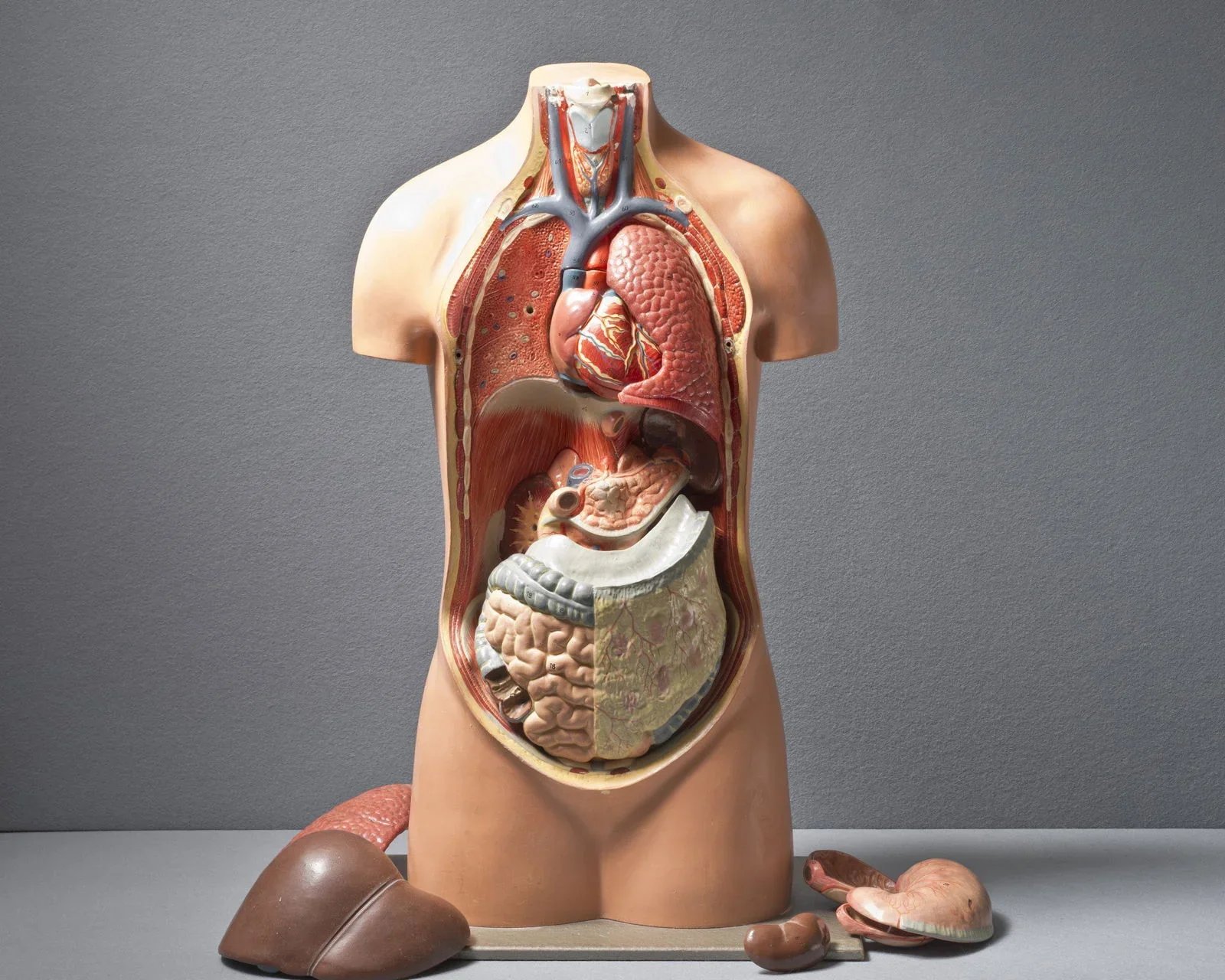
Your body is composed of many interrelated components including bones, muscles, nerves, internal organs (viscera), and connective tissue (fascia). Fascia was once thought to be a passive structure holding the muscles, bones, and organs in place.
However, more recent research has revealed that fascia is an organ system that plays an essential role in cellular communication. This fascia is a continuous sheath, lining the organs and abdominal cavity and is interconnected throughout your entire musculoskeletal system. Thus, any restriction in the body can affect the body elsewhere. Think of fascia as a giant sweater….if it gets snagged/pulled in one area, it can affect the entire sweater.
Picture your musculoskeletal system as a container and your insides (organs, blood vessels and nerves) as the contents. The container’s job is to protect the contents at all costs. It’s the contents that keep us alive. Therefore, there is a high probability that the root cause of your musculoskeletal complaint is found in the contents.
Most people seek physical therapy to treat the container, like addressing shoulder pain by focusing on the shoulder. While this can relieve symptoms, if any underlying issue within the organs, vessels, or nerves isn’t addressed, the symptoms may return.
When the contents are treated, the container no longer needs to protect the dysfunctional area, and lasting relief becomes possible.
As an example, I had a client who presented with left hip pain and periotic “sciatica” going down her left leg. She had previously undergone “traditional” physical therapy consisting of stretching, strengthening, joint mobilizations, and modalities focused on the left hip.
Although physical therapy decreased her symptoms, she was still having 4/10 hip pain when sitting more than 30 minutes and walking more than 0.5 miles, and experienced sciatica 2-3 times a week with repetitive bending activities.
Upon evaluation, I felt fascial restrictions in her right lower abdomen. The patient then informed me she had had her appendix removed as a child.
After 3 sessions of treating these fascial restrictions utilizing OSFM techniques, she no longer had any hip pain or sciatic symptoms. I did not treat the hip or low back.
Your organs are in perpetual motion. When you breathe, walk and move, your organs move in your chest and abdomen. For example, when you take a breath, your kidneys move 1 inch; with deep inhalation, they move 4 inches.
This movement of organs is transmitted through fascia to other structures of your body. When you are healthy, all these structures move with fluidity. However, when fascia becomes restricted due to physical trauma, emotional trauma/stress, surgery, repetitive movements, infection, poor posture, etc., the associated organs become restricted, and the organ cannot do its job.
These fascial restrictions create abnormal points of tension and chronic irritation, leading to functional and structural impairments throughout the body.

As another example, I had a 30 y/o client who presented with excruciating 10/10 lower abdominal and back pain with menstruation and a diagnosis of endometriosis.
Upon evaluation, I found significant fascial restrictions in her lower abdomen that may have limited the uterus’ ability to “do its job”--contract and shed the endometrial lining.
After 3 sessions focusing on OSFM to the restricted fascia, her menstrual pain was reduced to 2/10.
These scenarios illustrate how even a small fascial restriction can have widespread effects, amplified by thousands of repetitive daily movements. Over time, these compensatory patterns can lead to pain in areas far removed from the original dysfunction. Understanding this connection is key to lasting relief and explains why addressing the root cause can transform your health.
Research Supporting OFSM/VM:
As an educator, I understand the importance of research and evidence-based intervention. Please refer to the Barral Institute searchable article data base
How many sessions does it take?
As each person’s situation and body are different, the number of visits will vary.
Many people experience significant improvement within 3-4 sessions; others may require additional treatment.
Typically, it is recommended that sessions take place every 3-4 weeks.